The Mythology of Irish Whiskey: Spirit of a Nation
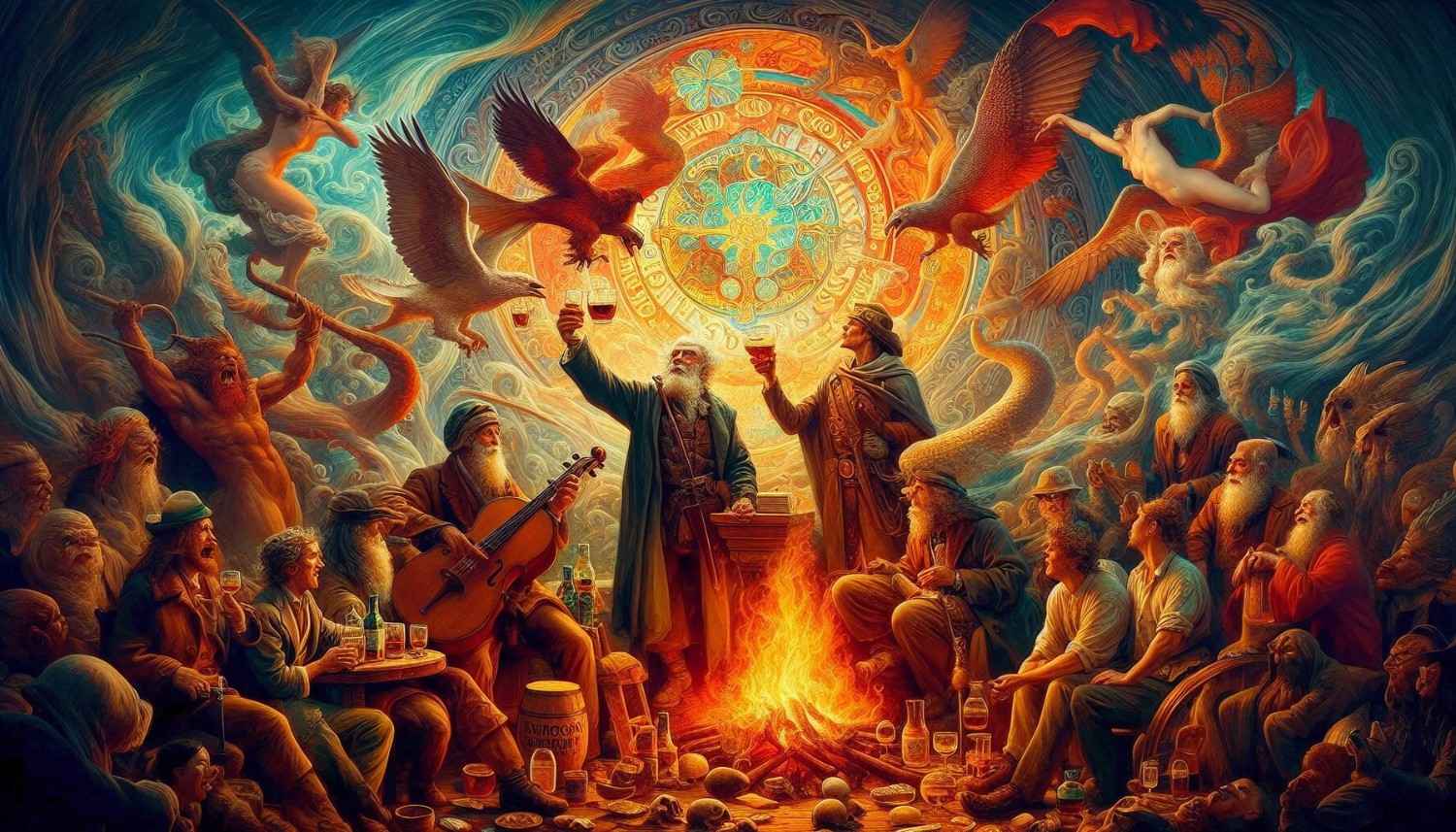
There’s a saying in Ireland that the land doesn’t speak in words, it speaks in stories. From mist-covered bogs to candlelit pubs, myth and history dance together in ways that defy clear boundaries. And nowhere is this more true than in the story of Irish whiskey.You can trace the lineage of Irish whiskey through time like the rings in an ancient oak, layer after layer of tradition, upheaval, artistry, and resilience. But behind the amber glow of each glass lies something deeper: a cultural totem, a national symbol, and a living connection to Ireland’s soul.Whiskey in Ireland isn’t just a drink. It’s mythology in a bottle.The Origins: “Uisce Beatha” — Water of LifeTo understand Irish whiskey, we have to go back, way back. The word whiskey itself comes from the Irish uisce beatha, meaning “water of life,” a translation of the Latin aqua vitae. The earliest records of distillation in Ireland date to the 12th century, when Irish monks, returning from Europe, brought knowledge of distilling perfumes and turned their curiosity toward something far more useful: distilling grain.Legend tells us that Saint Patrick himself may have had a hand in introducing distillation to Ireland—though there’s no historical proof of that. Still, the myth persists, and in Ireland, myth carries weight. What we do know is that distillation was well established in Irish monasteries by the 1400s, where monks used primitive stills to create strong spirits for medicinal and spiritual purposes.It didn’t take long for the “medicine” to become a matter of enjoyment.From Hillside to Hearth: Whiskey in the Irish Way of LifeBy the 16th and 17th centuries, whiskey had become a central fixture in Irish life. Distillation spread far beyond the monasteries into farms and villages. Whiskey was present at births, weddings, wakes. It was drunk in celebration and sorrow, shared as a gift, a blessing, a bribe, or a sign of hospitality.At its height in the 1800s, Irish whiskey dominated the world stage. Dublin alone boasted four major distilleries, with names like Powers, Jameson, and George Roe producing tens of millions of litres annually. Irish whiskey was known for its smoothness, largely due to the use of triple distillation and unmalted barley, a style now known as pot still whiskey.Whiskey was more than a drink. It was a point of national pride.The Fall: War, Prohibition, and the Long SilenceBut then came the dark age.In the early 20th century, Ireland was ravaged by civil war, trade embargoes, and economic collapse. Prohibition in the United States, a major export market, cut Irish whiskey off from one of its biggest audiences. Meanwhile, Scotland's whiskey industry grew stronger and more commercially savvy, using blended whiskey to appeal to a broader market.Irish distilleries began closing, one after another. By the 1980s, only two remained: Bushmills in the North and Midleton in the South. An entire culture, a global reputation centuries in the making, seemed on the verge of extinction.But you can’t kill something that lives in the soul of a people.The Rebirth: A Spirit RekindledThe Irish whiskey revival didn’t come overnight. It came through patience, innovation, and the unrelenting belief that the world still wanted what Ireland had to offer.Bushmills held strong in the North, carrying the torch of history with single malts aged to perfection. Midleton, in Cork, became the heart of Irish whiskey’s resurrection—producing not only Jameson, but also Redbreast, Green Spot, and the now-iconic Midleton Very Rare.Today, Irish whiskey is the fastest-growing spirit category in the world. New distilleries are opening across the country. Whiskey festivals, tasting rooms, and education centres are thriving. And most importantly, Irish whiskey has returned to its rightful place: as a premium spirit, respected by connoisseurs, bartenders, and collectors across the globe.But even as the industry modernises, the mythology remains.The Modern Icons: Redbreast, Midleton, and BushmillsIn the modern landscape, a few names rise above the rest—bottles that don’t just represent excellence, but history in every sip.RedbreastThis single pot still whiskey is one of the finest expressions of traditional Irish distillation. Aged in a mix of bourbon and sherry casks, Redbreast is rich, complex, and deeply evocative of the old style. Whether it’s the accessible 12-Year-Old or the luxurious 27-Year-Old, Redbreast is where history meets artistry.Midleton Very RareThis annual release is a celebration of the best whiskey that the Midleton Distillery has to offer. Blended from the distillery’s rarest casks, it’s a collector’s dream, smooth, layered, and evolving from year to year. It’s a bottle you open to mark milestones.Bushmills 21-Year-OldFrom the world’s oldest licensed distillery, the Bushmills 21-Year-Old is aged in bourbon, sherry, and Madeira casks. It’s dignified, opulent, and quietly powerful. Bushmills proves that being familiar doesn’t mean being ordinary.A Living LegacyThe story of Irish whiskey is one of rise, fall, and rise again. It’s woven into the songs we sing, the toasts we raise, and the stories we pass down. In every glass, there’s a whisper of monks and merchants, poets and rebels, saints and storytellers.So the next time you pour a dram of Redbreast, Midleton, or Bushmills, remember—you’re not just drinking whiskey. You’re partaking in a legacy older than most nations, shaped by fire, faith, and folklore.And in a country where stories matter more than facts, that may be the truest thing of all.Sláinte, to spirits, myths, and the Ireland that lives on in every drop
See More 0
0